
Choosing the right drain cleaning machine is not only about motor power. For a distributor, the best product range must match local pipe sizes, contractor expectations, power standards, service capacity, and
price positioning.
Choosing one machine for your own service work rather than a resale range? Start with our 5-step drain cleaning machine buyer’s guide.

01. Start by Defining Your Customer
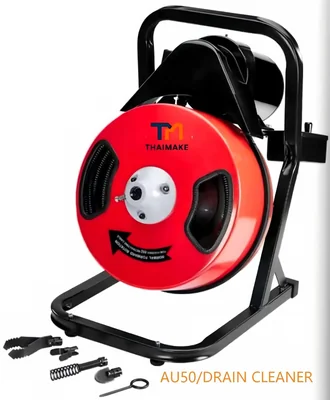
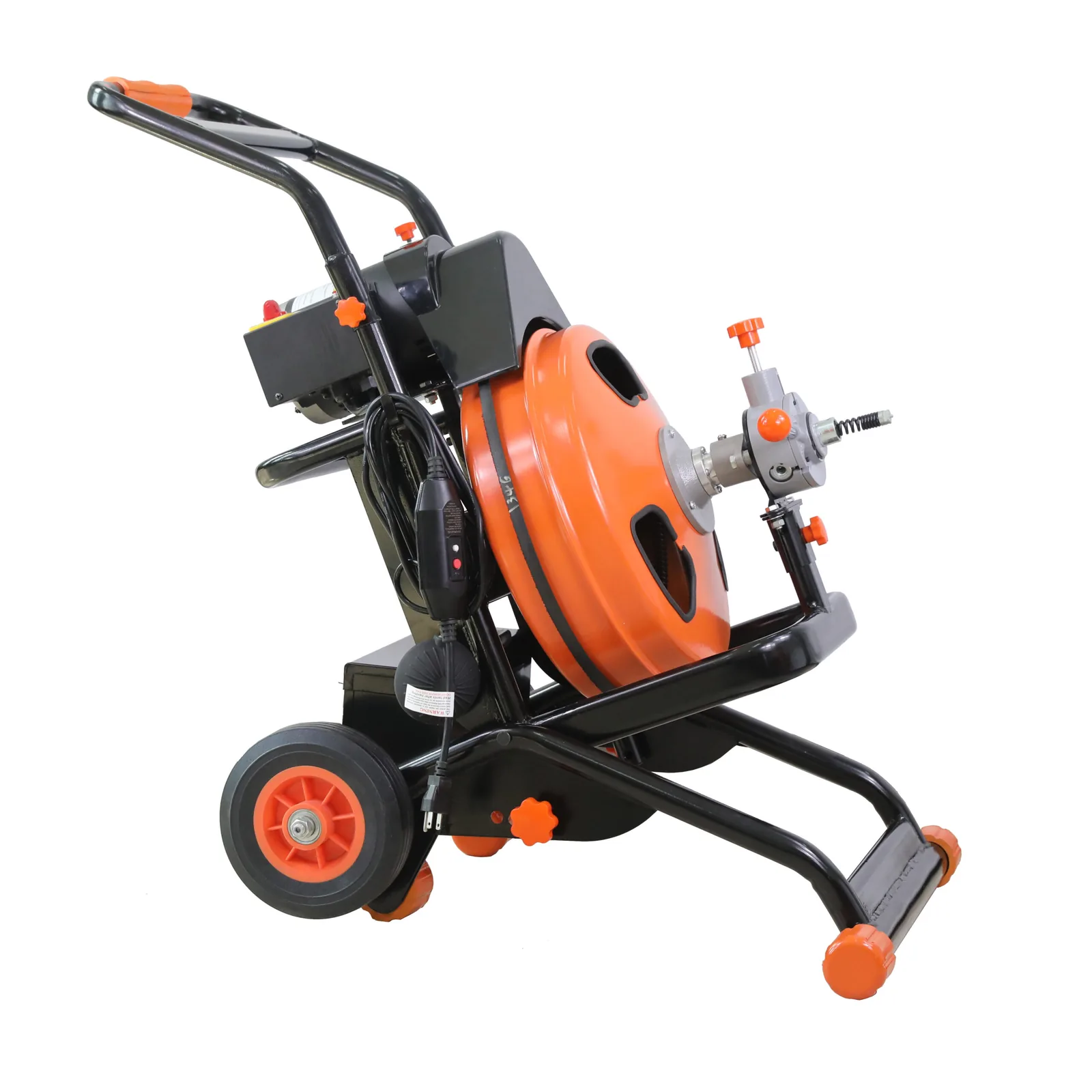
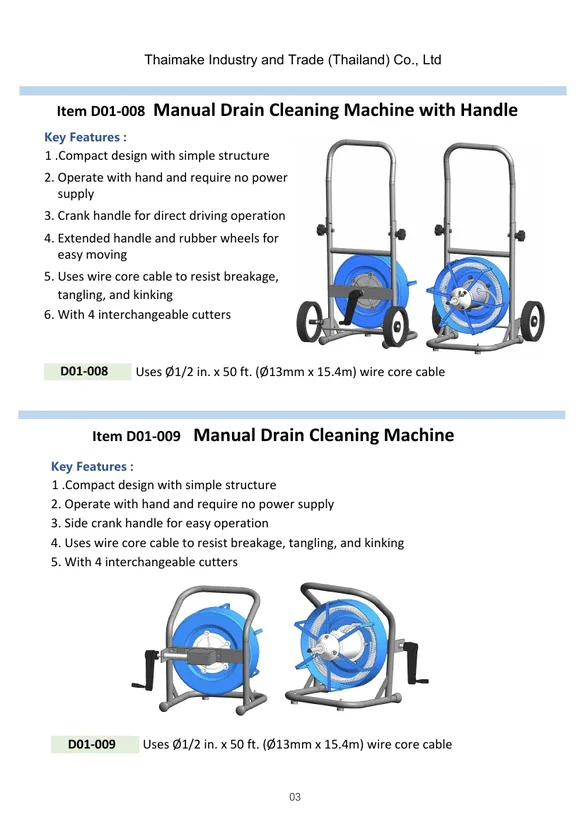
Start by defining the customer. Compact drum machines are often suitable for plumbers handling sinks, floor drains, and smaller branch lines. Larger drum or sectional machines are intended for more demanding commercial work, longer runs, and main-line applications.
A well-balanced range lets distributors serve professional contractors without carrying too many overlapping models — every SKU should have a clear customer position rather than trying to cover everything at once.
02. Check the Pipe Range and Cable System
Every model should clearly state its recommended pipe diameter, maximum working length, cable diameter, and compatible cutting tools. These parameters determine how much real-world work the machine can cover.
Buyers should also compare manual-feed and automatic-feed systems. Automatic feed can improve jobsite productivity and reduce operator fatigue, while simple manual systems may be easier to service and position at a lower price point. Distributors can balance the mix according to local work intensity.
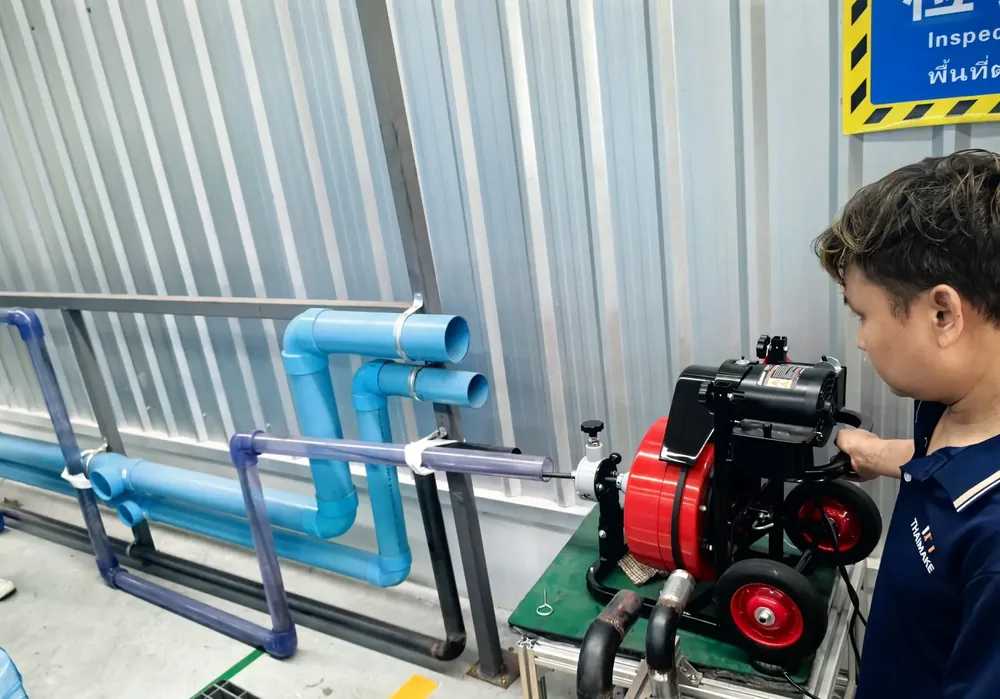
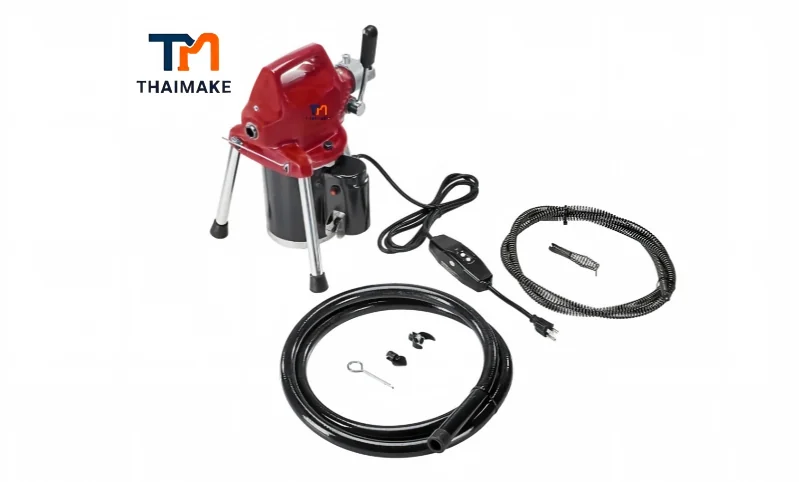
See our electric drain cleaning machines with 50-100 ft cable options.
03. Match the Electrical Specification to the Market
For export projects, confirm the voltage and frequency requirements. North American buyers commonly require 110–120V / 60Hz, while European and most Asian markets use 220–240V / 50Hz. Before entering each market, confirm with the factory the availability of the matching voltage version, plug configuration, and local compliance requirements.
04. Corded or Cordless? Configure by Jobsite
Corded machines deliver stable power for continuous, long-running work and remain the mainstream choice for municipal and commercial cleaning. Cordless (battery-powered) machines are easy to carry and suit jobsites without reliable power, rental scenarios, and rapid-response repairs.
The rule of thumb: if local contractors mostly work long hours in fixed locations, lead with corded and add cordless as backup; if jobs are short, multi-site, or outdoors, increase the share of cordless models.
05. Cutting Tools and Accessories: Repeat Sales and Reputation
Clearing performance depends heavily on the cutting tools. Check whether tools are compatible across models and whether common sizes (augers, cutters, and the like) are easy to source. Spare-part availability directly drives customer downtime — and your repeat sales and reputation.
06. After-Sales Service and Technical Support
Choosing a machine also means choosing the service boundary you can provide: localized documentation, factory training, a clear wear-part list, and a warranty that is actually honored. Your service capability defines the customer tier you can cover.
07. Price Positioning and Range Planning
Use a clear price ladder to cover different customers: entry-level models for individual plumbers, mid-range machines for most contractors, and high-end units for commercial and municipal projects. Avoid overlapping models so every SKU has a clear profit role and competitive position.
08. Certifications, MOQ, Warranty, and Lead Time
Export markets typically require CE and other safety certifications plus local electrical compliance. Before publishing or quoting, verify the latest certification documents, MOQ, warranty period, and lead time with the factory, so that marketing claims never outrun supply — this is the baseline for long-term customer trust.
Have questions about specs or pricing? Check the drain cleaning machine FAQ.
Distributor Selection Checklist
- Customer profile: individual plumbers / professional contractors / municipal projects — what share does each represent?
- Pipe range: do the recommended pipe diameters and maximum working lengths cover local mainstream jobs?
- Feed system: manual vs. automatic feed, balanced by work intensity.
- Electrical spec: voltage, frequency, plug, and compliance for each target market.
- Power source: the right corded / cordless mix.
- Tools and accessories: cross-model compatibility and supply speed for common sizes.
- Service support: training, wear-part lists, warranty execution.
- Supply chain: certifications, MOQ, warranty, lead time — verify item by item before publishing.
Conclusion
Define the customer first, then the pipe range, electrical specification, and service capability — and only then settle pricing and supply chain.
Work through this checklist and you can build a drain cleaning machine line that covers mainstream demand, avoids overlap, and stays profitable.
Ready to build your product range? Request a wholesale quote.